Maximise ROI from Your Retired IT Assets
Turn your legacy technology into recovered capital while ensuring total data security.
Get Your Free ValuationIn the fast-paced corporate world, the focus is almost always on the next upgrade. Organisations obsess over processor speeds, cloud storage capacity, and cutting-edge software, yet a silent pile of retired IT assets often accumulates in storage cupboards, data centres, or forgotten corners of the office. For many businesses, this equipment – from laptops and desktops to servers and networking gear – is viewed as nothing more than a logistical headache and a potential security risk. However, it is actually a significant store of untapped financial value and an opportunity to bolster your corporate social responsibility (CSR) initiatives.
Understanding the Value of Retired IT Assets
To truly maximise ROI from your IT assets, you must first recognise that retired hardware is rarely worthless. Whether it is enterprise-grade laptops, servers, networking equipment, mobile devices, or even peripherals, these items hold significant secondary market value. Components can be reused, entire units can be refurbished for resale, or valuable raw materials can be harvested through responsible recycling. By implementing a strategic IT Asset Disposition (ITAD) programme, you transform a potential cost centre into a consistent source of revenue, contributing directly to your bottom line and supporting a circular economy.
The Risks of Inaction
Neglecting your retired hardware carries significant and often underestimated risks, including:
- Data Breach Liability: Improperly wiped drives are a massive security risk. Sensitive corporate data, client information, and intellectual property can fall into the wrong hands, leading to severe financial penalties (e.g., GDPR fines), reputational damage, and loss of customer trust.
- Environmental Fines: Failure to comply with the UK’s WEEE Regulations can result in heavy penalties. Not sure what they require? Read our plain-English WEEE guide.
- Storage Overhead: Obsolete equipment occupies valuable physical space that could be better utilised for active operations – plus the hidden costs of managing and securing it.
- Missed Revenue Opportunities: Every piece of retired equipment that sits idle represents lost capital. Without a proper ITAD strategy, businesses forgo the opportunity to recover significant value through resale or material recovery.
Key Strategies for Maximising ROI
Maximising the ROI from your IT assets requires a shift in mindset: treat your hardware as a lifecycle asset, not just a one-time purchase. This involves a multi-faceted approach encompassing secure data destruction, professional remarketing, and responsible recycling.
Certified Data Destruction
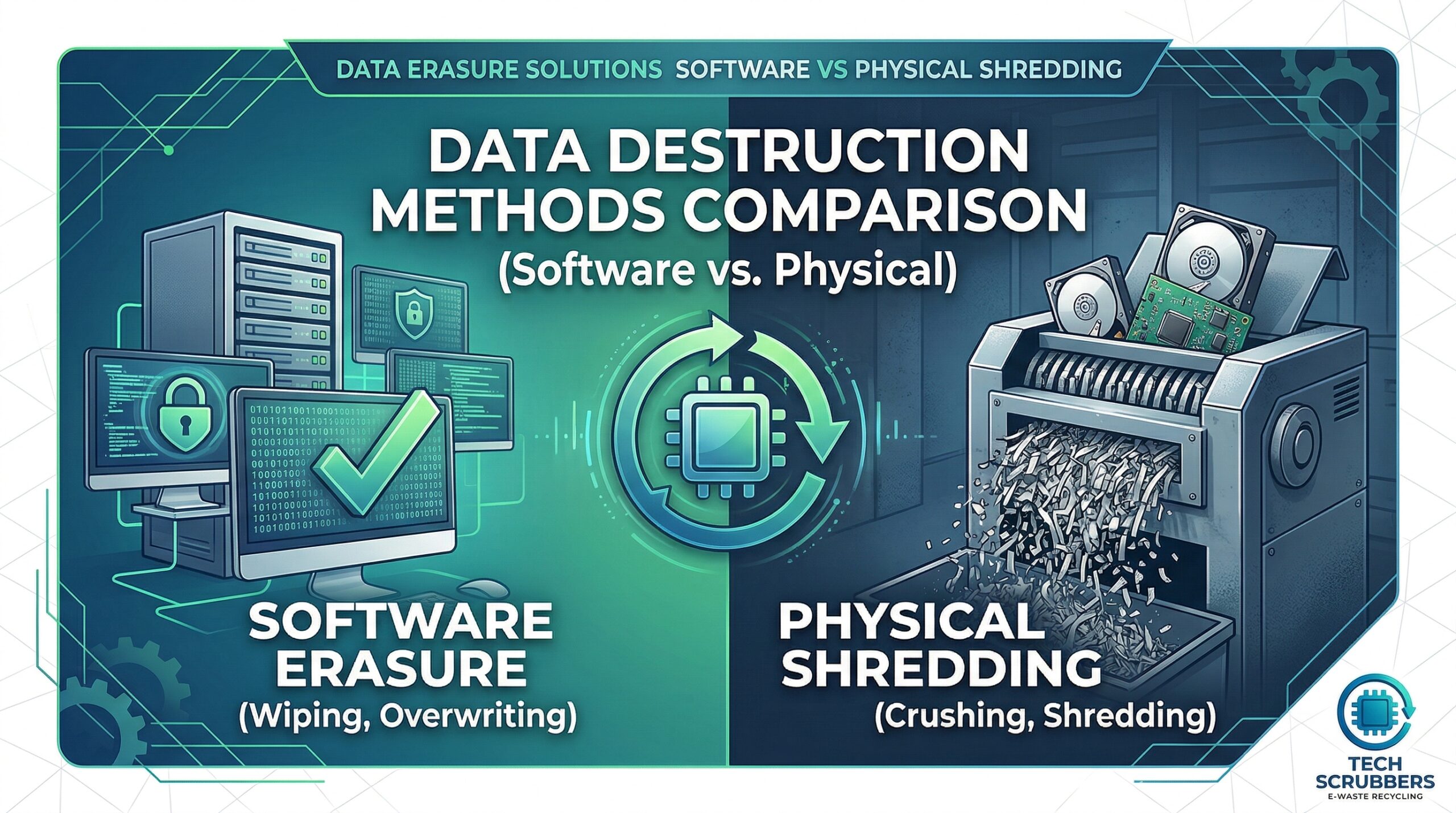
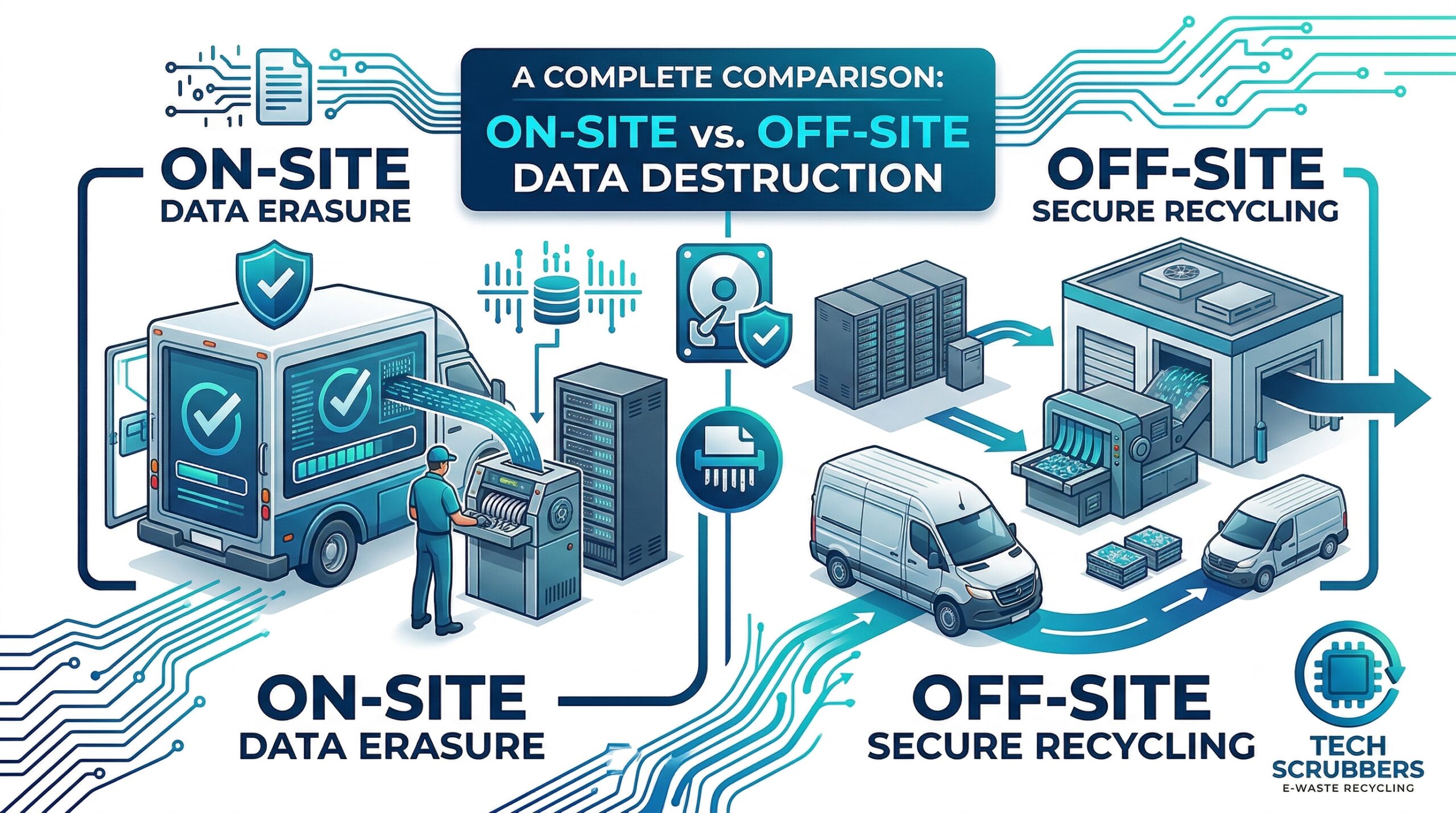
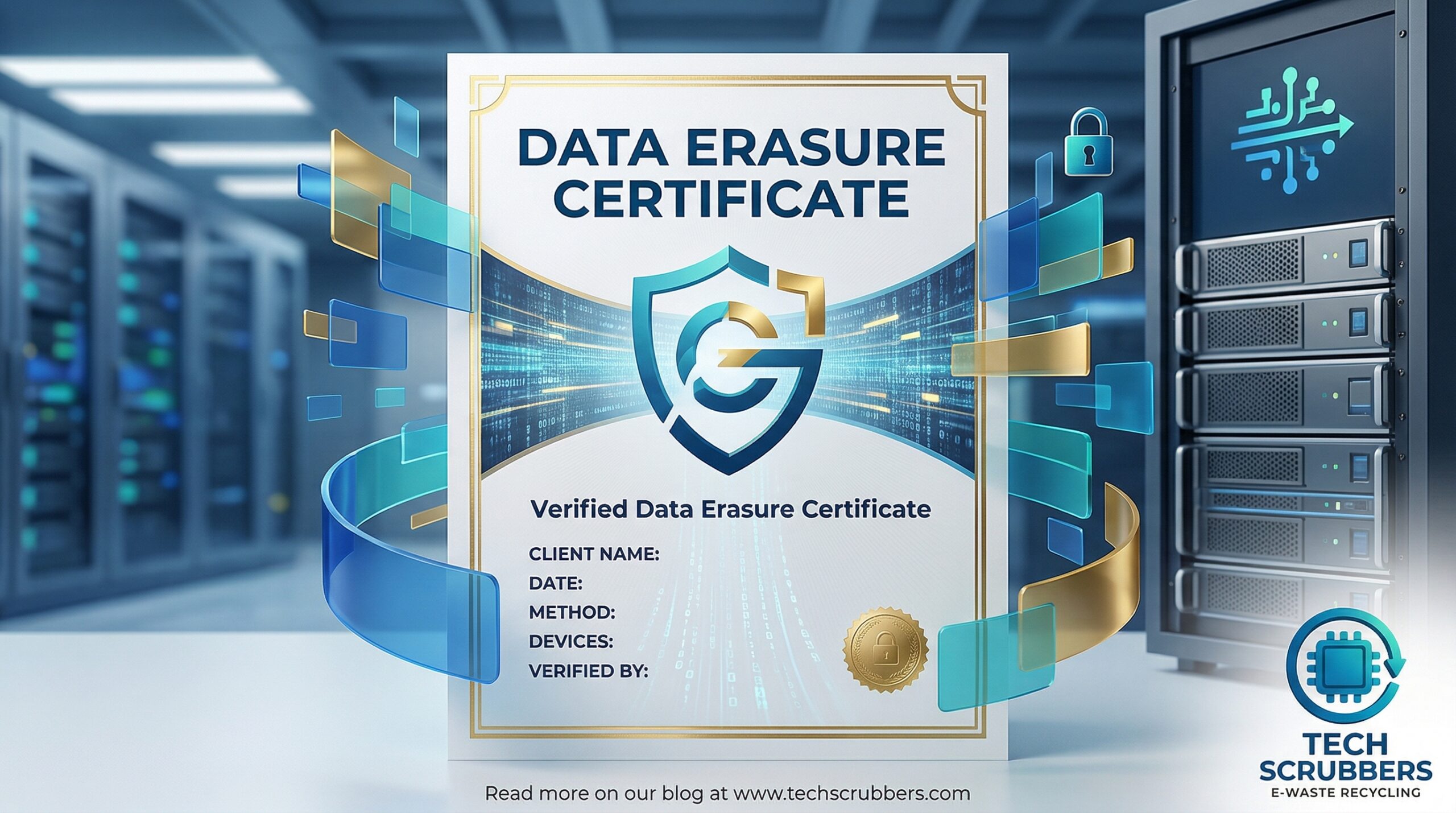
Before any asset can be resold or recycled, complete and verifiable data sanitisation is mandatory. TechScrubbers provides certified data erasure using methods aligned with NIST SP 800-88 and HMG IS5, ensuring your sensitive information is permanently removed beyond recovery. Drives that cannot be wiped are physically shredded. You receive a formal Certificate of Data Destruction for every device – a complete, auditable trail and peace of mind.
Explore Our Data Destruction ServicesProfessional Remarketing and Resale
For functional or repairable equipment, remarketing is the most direct path to financial recovery. Our process involves thorough testing, grading, repair, and cosmetic refurbishment to maximise the resale value. Leveraging extensive market knowledge and a broad network of buyers, we identify the best channels for your assets, ensuring you receive competitive returns. This not only generates revenue but also extends the life cycle of technology, contributing to environmental sustainability. Enterprise servers and networking kit often hold the most residual value of all.
Responsible Recycling (WEEE Compliance)
Not all equipment can be resold. For items that have reached end-of-life or are beyond economic repair, responsible recycling is crucial. We adhere strictly to the UK’s WEEE Regulations, ensuring that non-resalable assets are demanufactured and processed in an environmentally sound manner via our IT recycling service. Valuable materials like precious metals, plastics, and glass are recovered, reducing the need for virgin resources and minimising landfill waste.
Building a Sustainable ITAD Programme
A successful ITAD programme is not a one-off event but a repeatable cycle: Inventory, Sanitisation, Disposition, and Compliance. By partnering with experts who understand the nuances of the UK market and secondary markets, you ensure that every piece of equipment is tracked, securely processed, and that you extract the maximum possible value from your retired gear.
- Inventory & Assessment: Comprehensive auditing and condition assessment of all assets.
- Secure Sanitisation: Certified data erasure or physical destruction.
- Optimised Disposition: Strategic resale, refurbishment, or responsible recycling.
- Regulatory Compliance: Full documentation and adherence to WEEE, GDPR, and other relevant regulations.
This holistic approach leads to streamlined operations, reduced administrative burden, enhanced corporate social responsibility, and a significant boost to your financial recovery. A long-term ITAD partnership allows for tailored solutions that evolve with your business needs, ensuring continuous value extraction and risk mitigation.
Choosing the Right ITAD Partner
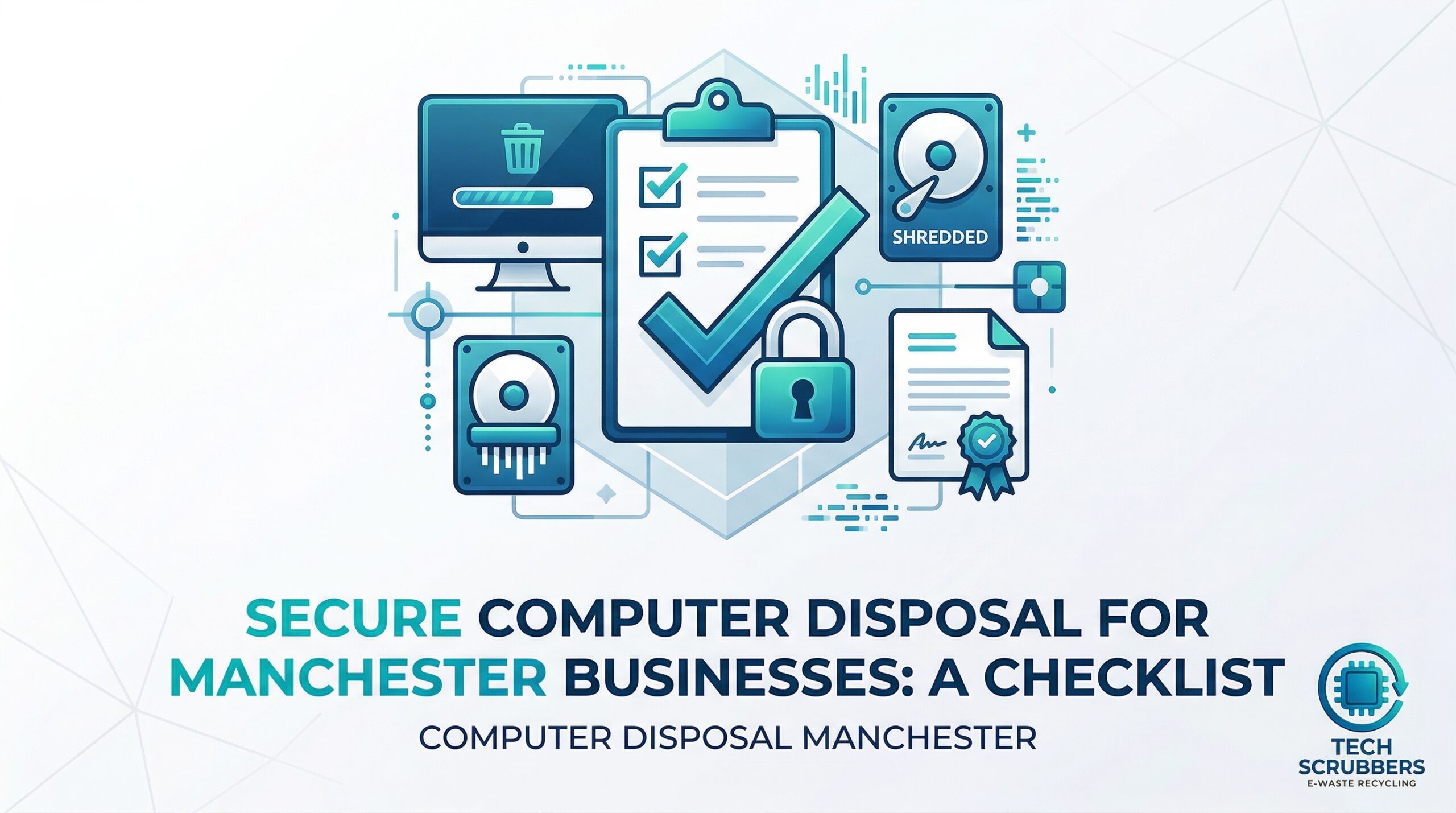
Selecting the right ITAD partner is paramount. Look for a provider with a proven track record, robust security protocols, recognised erasure standards (NIST 800-88, HMG IS5), and full waste-carrier licensing. Transparency in reporting, clear valuation processes, and a commitment to environmental stewardship are the key indicators of a partner who can truly help you maximise ROI and minimise risk. Start with our secure disposal checklist.
Frequently Asked Questions
How do I know my data is truly gone?
We use certified sanitisation methods aligned with NIST SP 800-88 and other recognised benchmarks. You receive a formal Certificate of Data Destruction for every device – verifiable proof that your sensitive information has been permanently removed.
Can I make money from old, broken equipment?
Yes. Even broken or non-functional equipment often contains valuable precious metals and other recoverable materials. Recycling through a professional partner can offset collection and processing costs, contribute to your CSR goals, and prevent harmful e-waste from entering landfill.
What types of IT assets do you handle?
Laptops, desktops, servers, networking equipment (routers, switches), mobile phones, tablets, monitors, printers, and other peripherals. If it’s an IT asset, chances are we can help you dispose of it securely and profitably.
How does the collection process work?
Once you request a valuation, we arrange secure, tracked collection from your premises at a time that suits you. Our team handles all logistics, ensuring your assets are transported safely to our processing facility.
See Our IT Asset Disposal Service